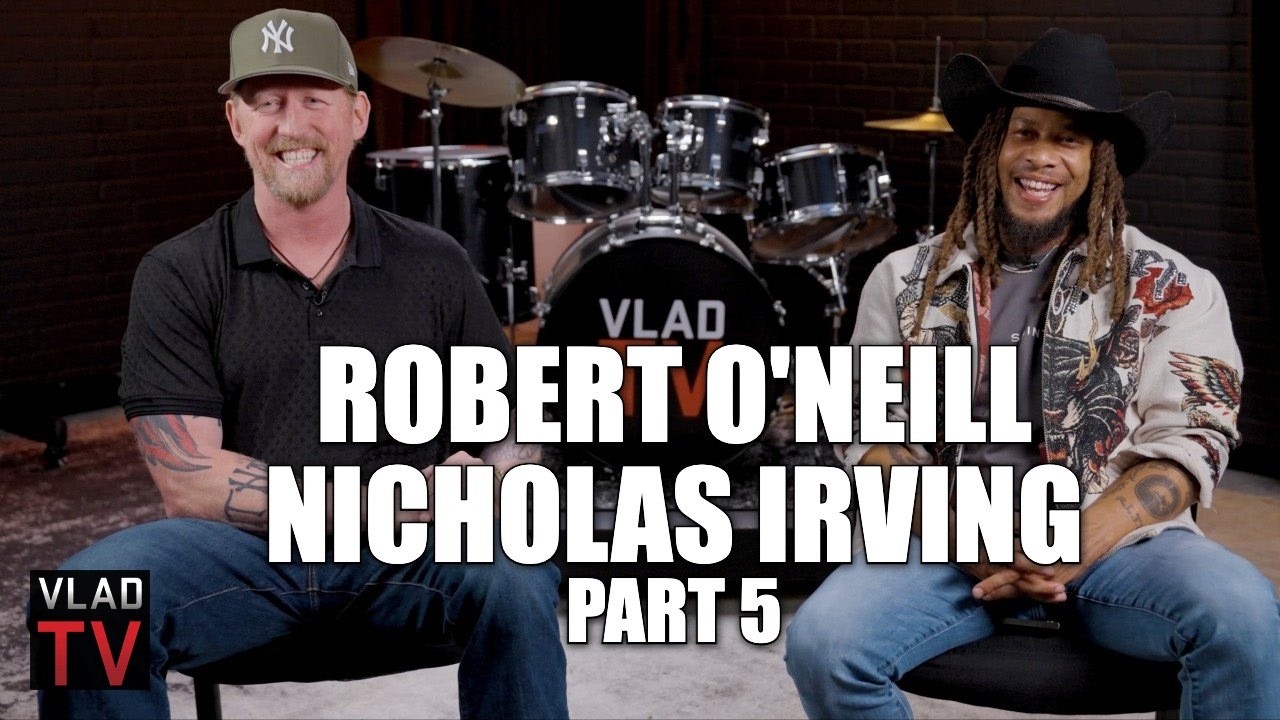
Nicholas “The Reaper” Irving and former SEAL Team Six operator Robert O’Neill join VladTV for a candid breakdown of how elite U.S. special operations units differ in training, mission roles, and battlefield execution.
O’Neill explains the pipeline from Navy SEALs to DEVGRU, the experience level at Delta Force, and how Army Rangers, RRC, Task Force 160, and tier-one teams worked together in Afghanistan. Irving details why Rangers often served as snipers, blocking forces, and assault support for high-risk targets.
The conversation also turns personal as Irving recalls a deadly firefight in Helmand Province near Marjah involving a Chechen sniper, the loss of Benjamin Cobb, and the challenges of restrictive rules of engagement. O’Neill adds perspective from deployments after the Osama bin Laden raid, FOB Shank, and the realities behind “hearts and minds” strategy.
Irving reflects on growing up in predominantly Black Baltimore before entering the military, where he encountered a very different environment and conversations around race. The interview also touches on his path toward becoming a Navy SEAL, how colorblindness affected his plans, training in Annapolis, and the unexpected turns that led him into the Rangers instead. O’Neill adds perspective from the SEAL community, with stories spanning BUD/S-style hardship, Newport, Rhode Island dive training, and memories involving Jocko.
O’Neill explains why night vision, communications, air superiority, and insertion platforms can decide a mission, recalling a vehicle interdiction operation in Baghdad involving multiple Tier One forces. Irving agrees that at the highest level, units like Delta and SEAL Team Six are nearly impossible to separate in capability, while noting the U.S. advantage in funding. The conversation also breaks down SEAL Team Six selection, Delta Force recruiting, the rumored “Long Walk” through the Appalachian Mountains, and the role of Rangers and Air Force support in high-risk operations.