
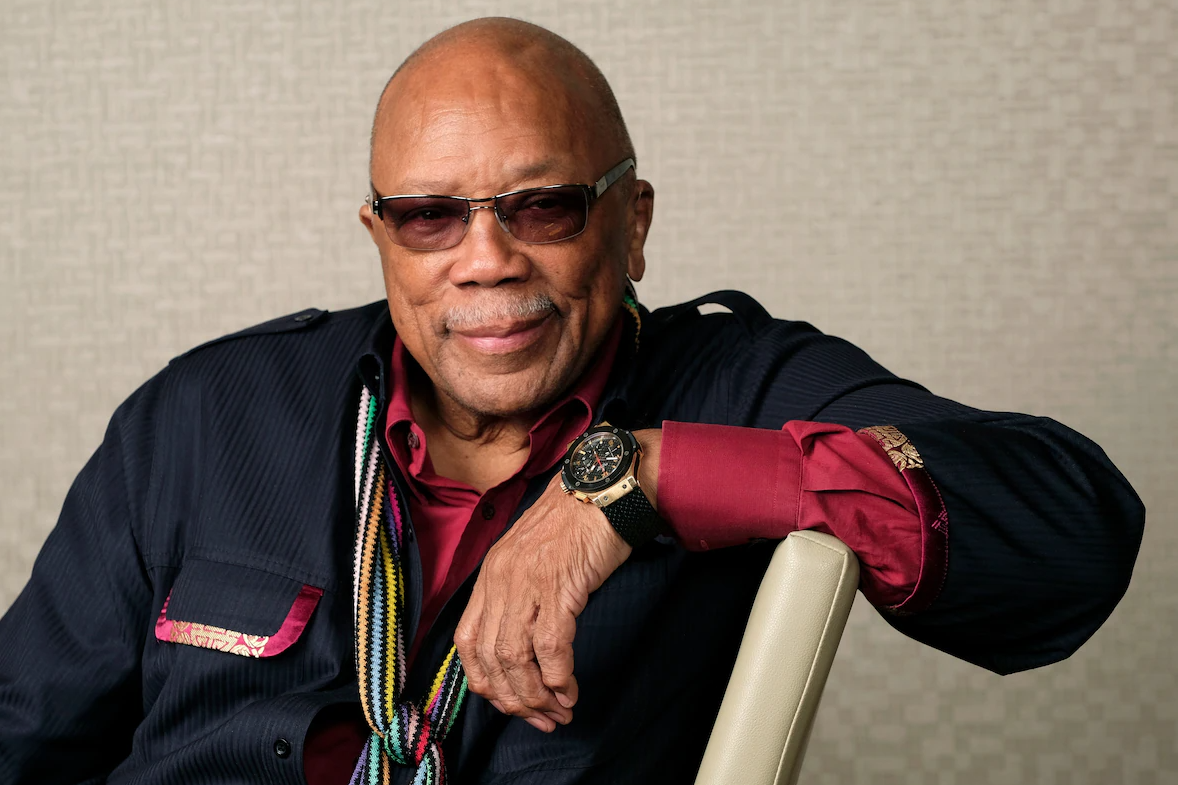
Quincy Jones, the musical giant whose seven-decade, barrier-breaking career encompassed many creative personas—musician, songwriter, producer, conductor, arranger, artist, record label owner and executive, TV/film producer, magazine publisher and humanitarian — has died. He was 91.
Quincy Delight Jones Jr. was born in Chicago on March 14, 1933, to parents Quincy Delight Jones Sr. and Sarah Frances Jones, and was raised with his only full-blood brother, Lloyd. His mother worked in a bank before being admitted to a mental institution for schizophrenia when Quincy was just a youngster; his father was a carpenter who played semi-pro baseball. Quincy Sr. divorced Sarah shortly after she was institutionalized and remarried a woman named Elvera, who had three children. They then had three more of their own, for an eight-sibling family.
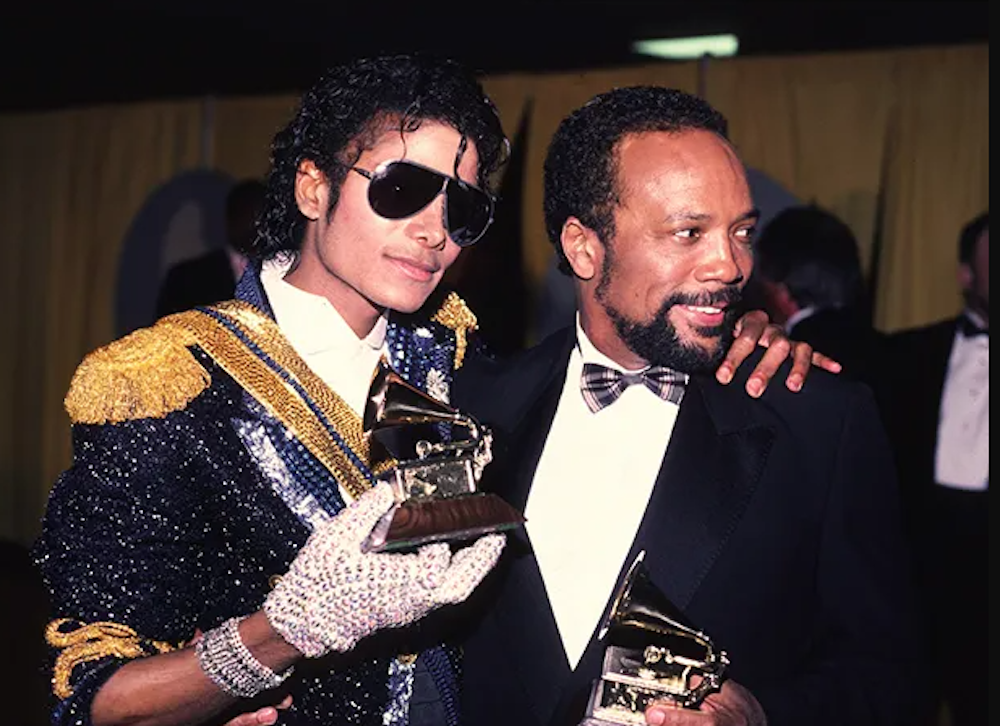
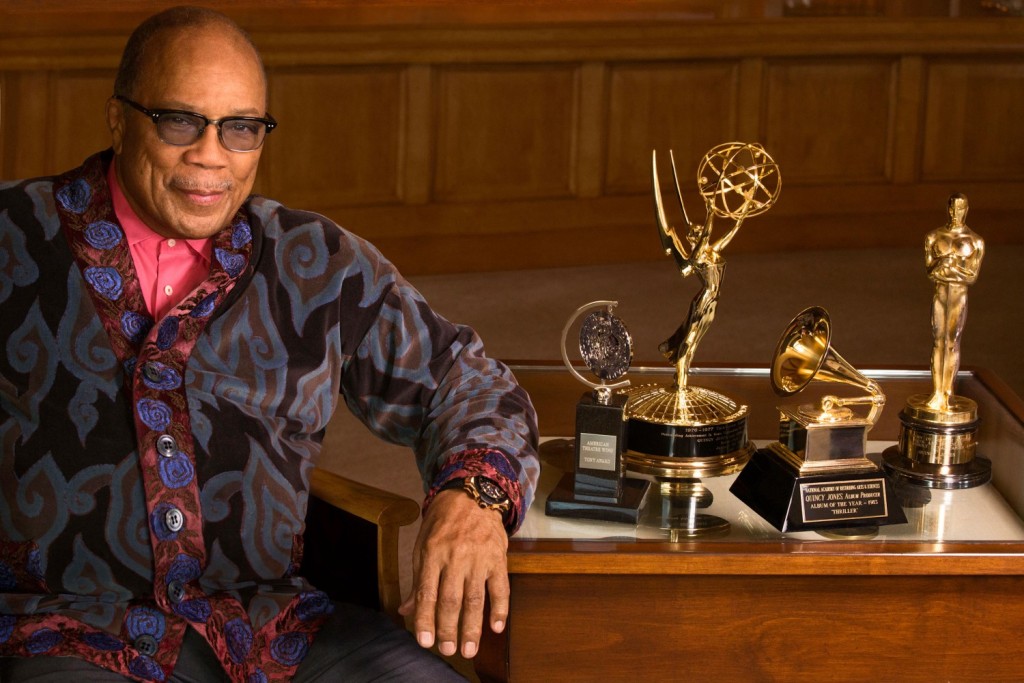
The legendary songwriter, producer and composer who worked with everyone from Michael Jackson to Ray Charles to Frank Sinatra has died at his home in Bel Air, California on November 3rd. With a career spanning over seven decades, Quincy Jones is celebrated as one of the most versatile and successful figures in music history. His extensive legacy includes collaborations with many other legendary artists, including producing Michael Jackson’s Off the Wall, Thriller and Bad albums. Notably, Thriller remains the best-selling album of all time, largely due to Jones’s visionary production.
In 1943, his father uprooted the family to move to Bremerton, Wash., and then to Seattle, where Quincy Jr. attended Garfield High School and ignited his passion for music by studying composition and learning to play the trumpet. When just a teenager, Jones met a 16-year-old Ray Charles—a meeting captured in the 2004 Jamie Foxx-starring biopic Ray—who became a huge inspiration, teacher and friend. They would later work together on numerous musical projects. While attending Seattle University, Jones played in the college band and continued to study music, but completed just one semester before transferring to Boston’s Berklee College of Music on a scholarship. He ultimately left Berklee to tour with Lionel Hampton as a trumpeter, before establishing himself as an arranger for some of the era’s leading talents, including Charles, Vaughan, Dinah Washington, Duke Ellington and Gene Krupa.
As a solo artist, Jones signed with ABC Paramount Records in 1956 and moved to Paris a year later, when he became the musical director for Mercury Records’ French distributor Barclay Records. In addition to studying composition with Nadia Boulanger, he toured throughout Europe working as musical director for composer Harold Arlen’s Free and Easy touring show. He also formed a band called The Jones Boys that was comprised of jazz artists from that show. Jones broke the colour barrier again as the first black composer to receive name recognition for his film work. The first theatrical feature that Jones scored was Sidney Lumet’s The Pawnbroker in 1964. With the support of Lumet and other industry allies like Henry Mancini and Sidney Poitier, Jones composed the music for two landmark films released in 1967: best picture Oscar winner In the Heat of the Night and In Cold Blood, based on the Truman Capote bestseller.
In 1975, Jones founded Qwest Productions, for which he arranged and produced albums by Sinatra and other major pop stars. He produced the soundtrack for The Wiz (1978), starring Jackson and Diana Ross. Soon thereafter, he and the future King of Pop recorded a series of game-changing albums that includes the top-selling Thriller.