
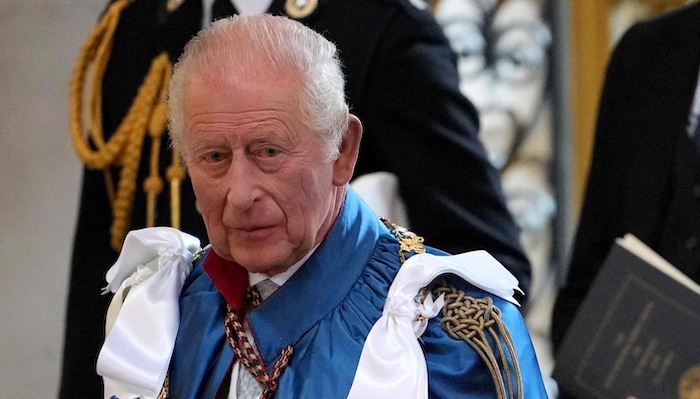
King Charles III faced fresh calls for slavery reparations and a formal apology since he started his Caribbean tour on October 27th.
Niambi Hall Campbell-Dean, who chairs the Bahamas National Reparations Committee, questioned the monarchy’s place in the country in an interview with The Associated Press. “Why do we still have a king? What does this person really represent to us?” she asked. Guyana’s President Irfaan Ali told ITV News that Charles’s past acknowledgment of slavery should be followed by an apology and reparatory justice. He also praised the king’s work on forests, climate change and Indigenous rights.
The palace’s plans run from October 27 through November 4, with stops in the Bahamas, Guyana and Antigua and Barbuda. Queen Camilla will join Charles in Antigua and Barbuda, where they will attend the Commonwealth Heads of Government Meeting. Guyana’s government said Charles would arrive on October 29 for a two-day state visit. His schedule includes a State House meeting with Ali and talks with the National Toshaos Council. A palace spokesperson said he would address past wrongs and enduring inequality during the visit, while host countries’ priorities would guide the program.
Barbados replaced Queen Elizabeth II with President Sandra Mason as head of state in 2021, when Charles attended its transition to a republic. The country remained a member of the Commonwealth. Guyana became a republic in 1970 and also stayed in the Commonwealth. Caribbean Community leaders had already agreed in July to make reparations a visible issue at the November Commonwealth summit. They approved a ten-point reparations manifesto, backed cooperation with the African Union and supported Jamaica’s planned petition to Charles.
Jamaica filed the petition on September 7 and referred it to the Judicial Committee of the Privy Council. It asks whether the capture, transport and enslavement of Africans in Jamaica were lawful under English law, whether they breached international law and whether Britain owes a remedy.