
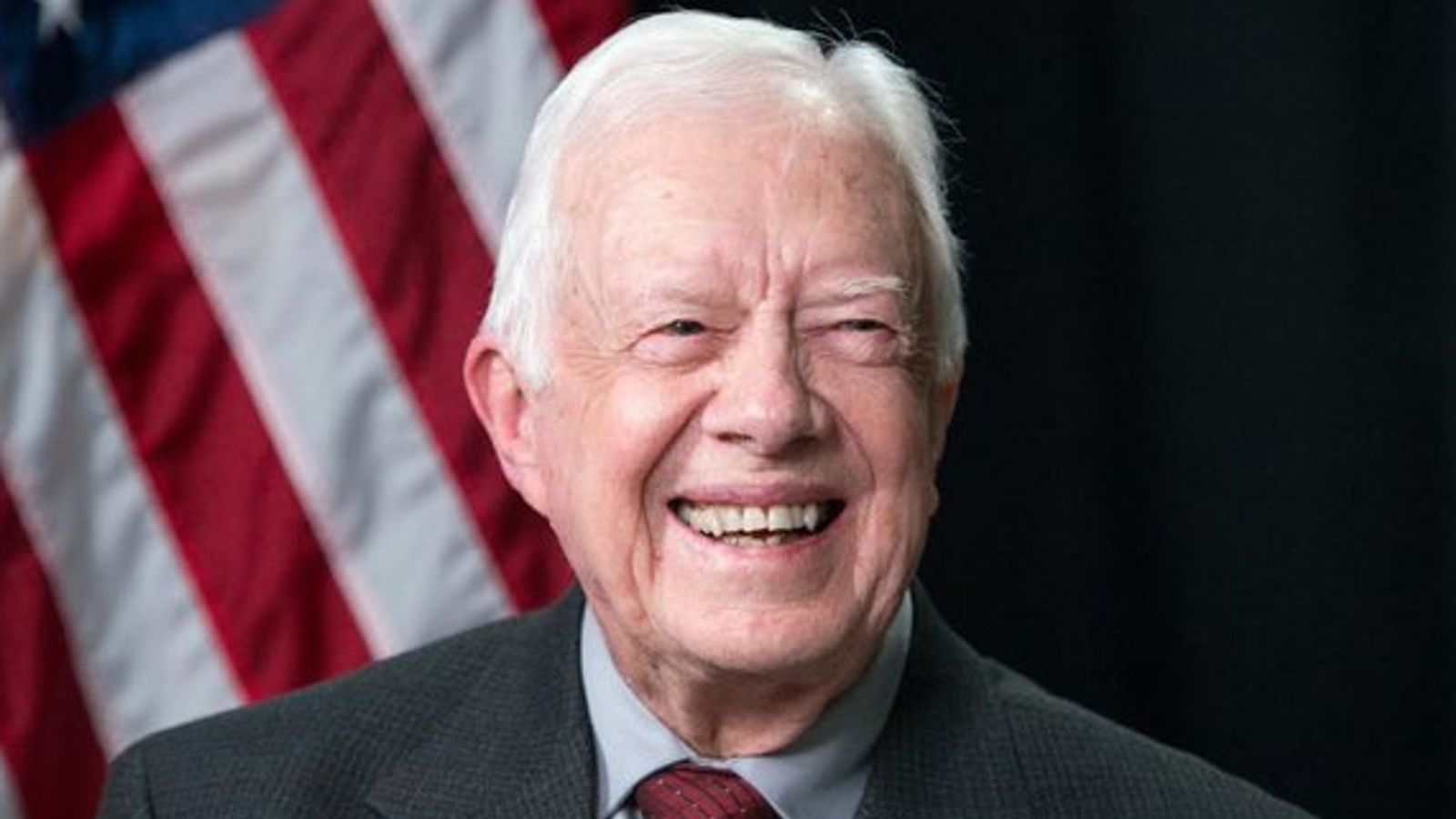
Jimmy Carter, the 39th president of the United States and a champion of peace and human rights, died December 29th at the age of 100, marking the end of a life that stretched from rural Georgia to global influence.
Carter, the longest-living U.S. president, passed away months after entering hospice care at home earlier this year, according to a statement from his family. A devout Christian who taught Sunday school at his local Baptist church for decades and whose faith-based politics were often championed as an antidote to the cynicism of the Watergate years, Carter unexpectedly ascended from the Georgia governor’s office to the presidency.
His 1977-81 presidential term, however, was marked by hard economic times for many Americans and the Iranian Revolution, which saw U.S. diplomats held hostage for 444 days and released only just after his successor, Ronald Reagan, was inaugurated. Over time, several Carter administration accomplishments would be recognized. They include the signing of the Camp David Accords signalling peace between Egypt and Israel, the Panama Canal Treaty and the SALT II Treaty with the Soviet Union to limit strategic missile development. Carter also established formal diplomatic relations between the U.S. and the People’s Republic of China.