
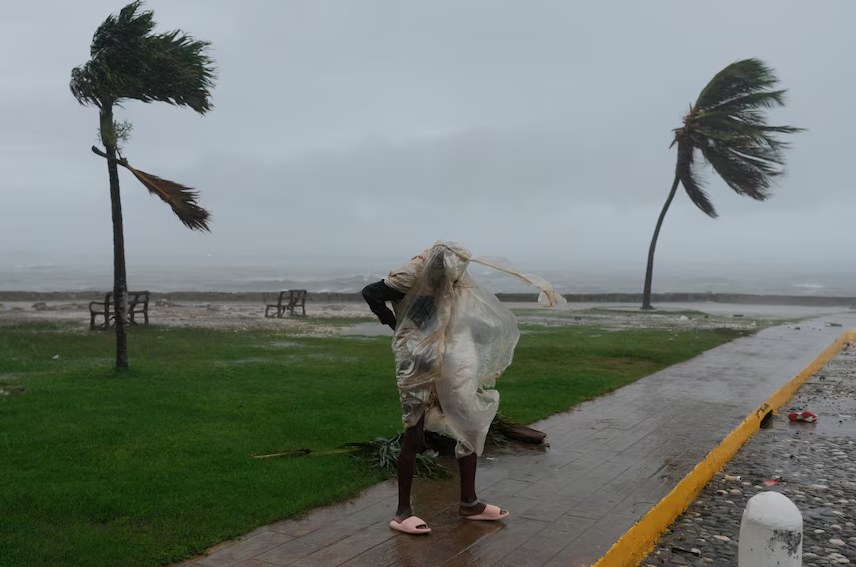
Without power or phone coverage, much of the country of Jamaica is isolated and so information is trickling through.
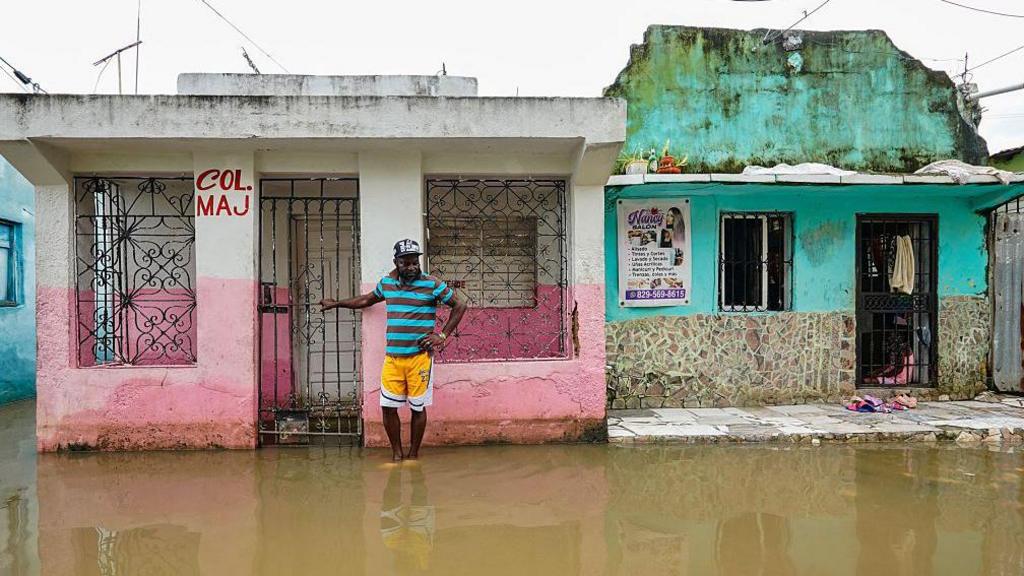
Three-quarters of the country had no electricity overnight, while the numbers of people injured – or perhaps dead – haven’t even begun to be counted. Many parts of Jamaica’s western side are under water, with homes destroyed by strong winds after the hurricane tore across the island with catastrophic force. As wind and rain lashed through the night, one local official said the destruction resembled “the scene of an apocalypse movie.”
With communications crippled, the true scale of the disaster remains unknown. Prime Minister Andrew Holness declared the island a “disaster area” late Tuesday, warning of “devastating impacts” and “significant damage” to hospitals, homes and businesses. Hurricane Melissa, the strongest storm to strike Jamaica in modern history, barrelled across the country on Tuesday, leaving behind a trail of ruin.
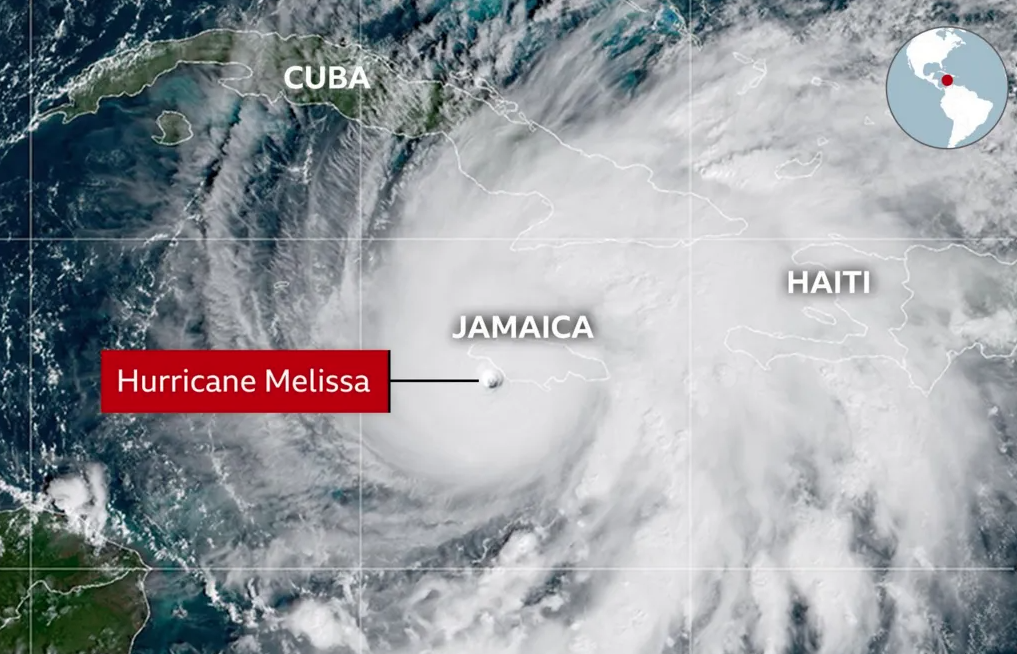
At its peak, the hurricane sustained winds of 298 km/h (185 mph) – stronger than Hurricane Katrina, which devastated New Orleans in 2005 and killed 1,392 people.
Stories of devastation are coming out – people have shared clips of roads that became rivers, mudslides on the hills, roofs being ripped from buildings and palm trees tossed like tooth picks. While no fatalities had been confirmed, Jamaica’s prime minister told CNN he feared “there would be some loss of life”. Damage, he said, was widespread – hitting hospitals, schools, homes and businesses. Local government minister Desmond Mckenzie said on Tuesday afternoon that the southwestern parish of St Elizabeth was “under water”, with at least three families trapped in their homes in the community of Black River. Verna Genus was sheltering from the storm at her four bedroom home in the village of Carlisle, St Elizabeth, when the hurricane ripped the zinc roof off her house. On the north coast, Montego Bay – the heart of Jamaica’s tourism industry and home to its main airport – will also take time to get back on its feet. This hurricane has put a hand around the neck of the Jamaican economy.
Meteorologists said Hurricane Melissa intensified at a speed rarely seen, its rapid strengthening fuelled by abnormally warm Caribbean waters – part of a broader trend linked to climate change. By the time it struck Jamaica, the storm had reached Category 5 strength, with gusts fierce enough to tear roofs from concrete homes, uproot trees and snap power poles. Health officials even issued a crocodile warning, cautioning that floodwaters could drive the reptiles into residential areas. For thousands of tourists caught on the island, the storm brought terror and uncertainty.