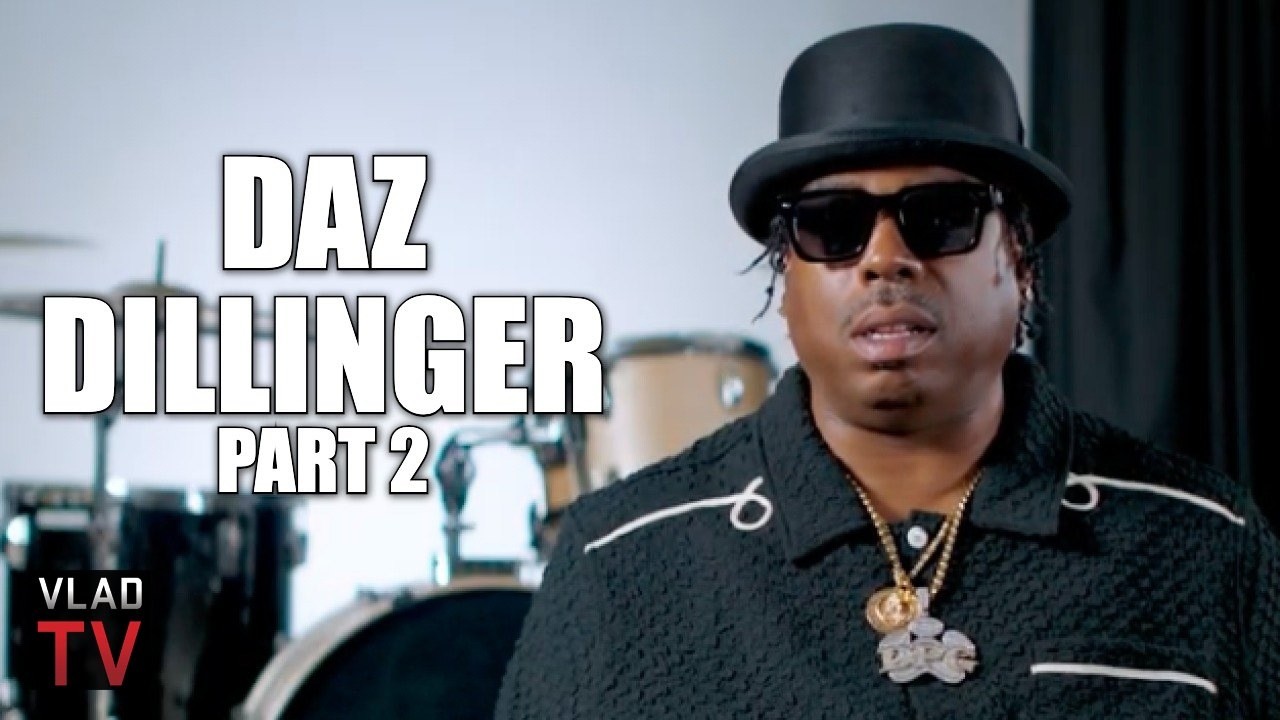
Daz Dillinger opened up about his early years with Snoop Dogg and how their paths intertwined before fame.
He revealed that around age 16, Snoop was sentenced to about nine months to a year in jail for selling crack cocaine, shortly after finishing high school. Despite this setback, their bond remained strong. During this time, Daz moved to Oklahoma briefly but returned to California to pursue music. Daz also shared how Dr. Dre played a crucial role in his development as a producer. At just 16, Dre taught him how to use studio equipment and produce tracks, moving beyond DJing to crafting full beats on tape machines with multiple tracks. They worked closely on projects including Paradise’s solo record at a legendary Hollywood studio. This mentorship helped shape Daz’s signature sound and solidified his role in the burgeoning West Coast hip-hop scene.
Daz Dillinger recounts a tense incident at Solar Studios during the early Death Row era involving Suge Knight. According to Daz, Suge pistol-whipped two men who were caught using a studio phone without permission. After a lengthy warning about excessive phone bills, Suge confronted the offenders, pulling a gun on them and humiliating one by stripping him. When resistance followed, Suge reportedly fired shots near the men’s heads, commanding one to perform a demeaning act involving his brother—a demand that was refused. The violent showdown reportedly disrupted a Dr. Dre recording session and is said to be captured on tape. Despite threats, the victims pressed charges and eventually sued Suge Knight, securing a settlement from Death Row Records. Daz reflects on the harsh, gangster environment that characterized the label during that era, highlighting the dangerous and volatile atmosphere behind the scenes as iconic hip-hop albums were created.
Daz Dillinger recounts a tense incident at Solar Studios during the early Death Row era involving Suge Knight. According to Daz, Suge pistol-whipped two men who were caught using a studio phone without permission. After a lengthy warning about excessive phone bills, Suge confronted the offenders, pulling a gun on them and humiliating one by stripping him. When resistance followed, Suge reportedly fired shots near the men’s heads, commanding one to perform a demeaning act involving his brother—a demand that was refused. The violent showdown reportedly disrupted a Dr. Dre recording session and is said to be captured on tape. Despite threats, the victims pressed charges and eventually sued Suge Knight, securing a settlement from Death Row Records. Daz reflects on the harsh, gangster environment that characterized the label during that era, highlighting the dangerous and volatile atmosphere behind the scenes as iconic hip-hop albums were created.